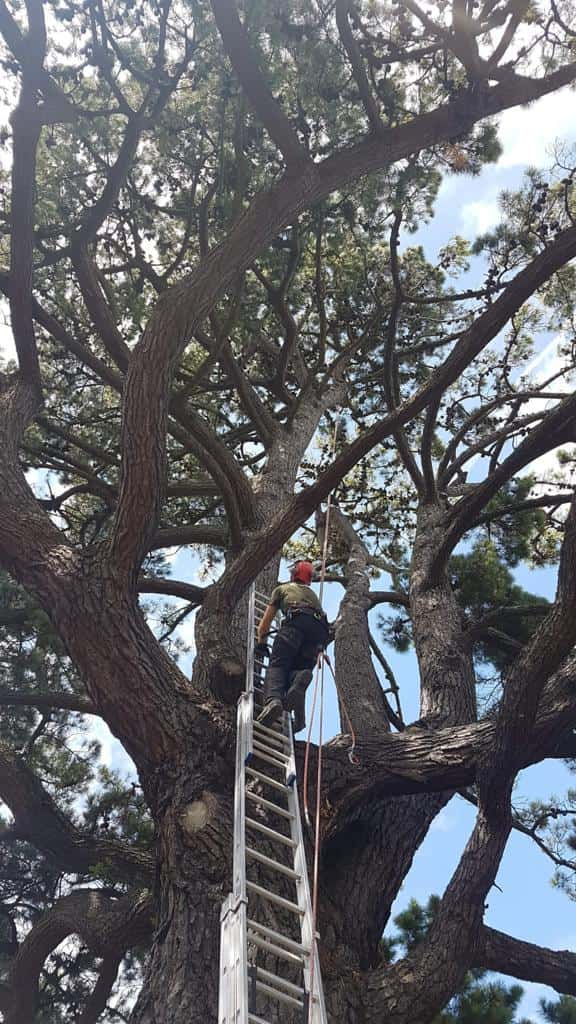
Tree cutting, pruning and trimming are often used as interchangeable terms, but they can describe different types of work. Understanding these differences helps property owners choose the most appropriate care for their trees rather than removing branches without a clear objective.
For trees in Ashtead, Surrey, the correct approach should reflect the tree’s species, condition, age, position and natural growth pattern. Professional assessment is therefore important before any significant work begins.
Understanding Tree Cutting, Pruning and Trimming
All three services involve removing some form of tree growth, but they differ in purpose, scale and technique. Pruning is generally selective and focused on the tree’s health or structure. Trimming usually manages lighter outer growth, while tree cutting is a broader term that can cover several types of branch removal.
What Is Tree Cutting?
Tree cutting is a general description for removing branches or sections of a tree. It may include anything from cutting back a branch obstructing a path to removing larger limbs that have become damaged or unsuitable for their surroundings.
The term does not define a particular technique. Before cutting begins, a tree surgeon should establish why the work is needed and how much material can be removed without compromising the tree.
Professional tree cutting may be used to:
- Remove damaged, split or hanging branches
- Restore clearance above paths and driveways
- Reduce interference with buildings or garden features
- Manage branches growing into unsuitable spaces
- Support more extensive reshaping work
Careful planning is essential because excessive or poorly positioned cuts can create large wounds, encourage weak regrowth and spoil the tree’s natural form.
What Is Tree Pruning?
Pruning is the selective removal of particular branches to improve the health, structure or safety of a tree. Each cut should have a defined purpose rather than simply making the crown smaller.
A tree surgeon may prune branches that are dead, diseased, damaged, crossing or poorly attached. Selective pruning can also improve the distribution of growth and reduce the likelihood of certain branches rubbing or competing with one another.
Common pruning objectives include:
- Removing dead or damaged wood
- Improving the tree’s branch structure
- Managing crossing or congested growth
- Maintaining suitable clearance
- Encouraging balanced development
- Reducing weight from a vulnerable branch
Good pruning respects the tree’s natural shape and avoids unnecessary removal. The position and quality of each cut matter because trees respond to wounds by sealing the affected tissue rather than healing it in the same way as human skin.
What Is Tree Trimming?
Tree trimming usually refers to the lighter management of outer growth. It is often undertaken to maintain a neat shape, prevent smaller branches from encroaching on nearby spaces or manage trees that produce dense seasonal growth.
Trimming may concentrate on the outline of the canopy rather than individual structural branches. However, it should not be confused with indiscriminately cutting every branch back to the same point.
Appropriate trimming can help:
- Maintain a tidy and balanced appearance
- Control lighter growth around garden features
- Preserve clearance over paths or seating areas
- Prevent young shoots from becoming overly dense
- Keep previously managed trees within an appropriate form
Even lighter trimming requires an understanding of how the species grows. Some trees respond poorly to repeated cutting or may need work to be carried out at a particular stage of their growth cycle.
How Do the Three Services Differ?
The clearest difference is their primary purpose:
- Tree cutting is a broad term for removing branches or sections of growth.
- Pruning is selective work intended to improve health, structure, safety or clearance.
- Trimming usually manages lighter outer growth and the overall shape of the canopy.
There can be some overlap. For example, cutting back a branch over a driveway may involve professional pruning techniques, while trimming a dense canopy may also remove minor dead growth. The correct service is determined by the tree’s needs rather than the label alone.
Which Type of Work Does Your Tree Need?
The answer depends on what you are trying to achieve and what condition the tree is in. A tree with several dead or crossing branches may benefit from selective pruning. One with dense outer growth encroaching on a garden feature may require careful trimming. A damaged or heavily obstructive limb may need more substantial cutting.
A professional assessment should consider:
- The species and typical growth habit
- The size, age and overall condition of the tree
- The location of weak, dead or damaged branches
- The balance and density of the crown
- Clearance around the property
- The tree’s likely response to branch removal
This assessment helps avoid removing healthy growth unnecessarily or choosing a method that fails to resolve the original concern.
Why Professional Technique Matters
Incorrect cutting can leave torn bark, poorly positioned wounds and unstable regrowth. Removing too much foliage at once may also reduce the tree’s ability to produce energy and respond to stress.
Professional tree surgeons use suitable cutting positions and techniques based on branch size, structure and condition. They also consider how the work will affect the complete canopy. The aim is to achieve the required result while preserving as much healthy, well-positioned growth as possible.
Is Tree Work Only About Appearance?
Appearance can be important, particularly where a tree has become uneven or is overwhelming part of a garden. However, professional tree work should also consider health, structure and future development.
A tree may look untidy because it contains damaged growth, competing branches or an imbalanced crown. Simply trimming the outer edge may conceal these issues without addressing them. Identifying the reason behind the unwanted growth leads to a more appropriate and lasting result.
Conclusion
Tree cutting is a broad term covering the removal of branches or sections of growth. Pruning is more selective and generally focuses on health, structure, safety or clearance, while trimming is commonly used to manage lighter outer growth and maintain shape.
Choosing the right method protects the tree from unnecessary damage and produces a result suited to both the tree and its surroundings. If you are unsure which type of work your tree requires, contact NS Tree Surgery Ashtead for a professional assessment in Ashtead, Surrey.
Call us on: 01372 679 991
Click here to find out more about NS Tree Surgery Ashtead
Click here to complete our contact form and see how we can help with your tree needs.